As India moves into 2026, the halls of Parliament and state assemblies echo with a familiar, yet increasingly hollow, sound: the absence of a unified, formidable challenge to the ruling dispensation. While the 2024 general elections initially hinted at a resilient comeback for the opposition, the subsequent years have revealed a deepening crisis of fragmentation and structural inertia. A “weak” opposition is not merely a political inconvenience for the minority; it is a systemic failure that threatens the very vitality of Indian democracy.
The Missing Mirror
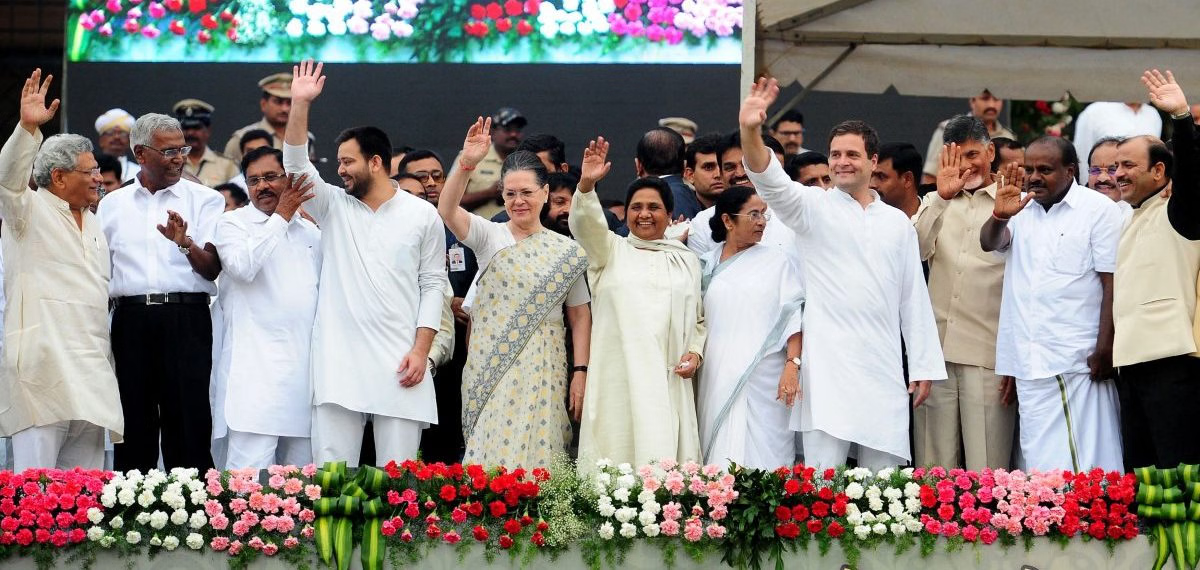
In a parliamentary system, the opposition is not just a “government-in-waiting”; it is the essential mirror that reflects the flaws in policy and the voices of those left unheard. Currently, that mirror is cracked. The primary challenge facing the opposition today is fragmentation. From the Congress’s ongoing struggle to reconcile national ambitions with regional survival to the internal power tussles within blocs like the INDIA alliance, the inability to project a single, coherent alternative agenda has left the electorate confused. When the opposition fails to offer a viable “Shadow Cabinet” or alternative policy roadmap—relying instead on reactive criticism—it cedes the narrative entirely to the Treasury benches. This results in what experts call the “Ordinance Raj,” where the executive bypasses legislative scrutiny because the resistance is too uncoordinated to demand debate.
Structural and External Hurdles
It would be intellectually dishonest to blame the opposition’s weakness solely on its leadership. The playing field in 2026 is significantly tilted. The erosion of institutional checks—ranging from a skewed media landscape to the disproportionate targeting of opposition leaders by central agencies—has created an environment where dissent carries a heavy price.
- Financial Asymmetry: The legacy of electoral bonds and the sheer disparity in political funding have made it nearly impossible for smaller or resource-starved parties to compete in high-stakes election cycles.
- The Identity Trap: The opposition remains largely trapped in regional and caste-based silos. While identity politics once served as a bulwark against majoritarianism, it now often prevents the formation of a broad-based, pan-Indian coalition capable of challenging the ruling party on national issues like unemployment and inflation.
The High Cost of Silence
The consequences of a timid opposition are visible in the quality of our laws. When bills are passed in minutes without being referred to Parliamentary Committees, the resulting legislation often lacks the nuance required for a country as diverse as India. The 2020 Farm Laws saga remains a stark reminder: when the opposition cannot effectively debate in the House, the debate spills onto the streets, leading to civil unrest and a breakdown of trust between the state and its citizens.
The Path Forward: From Reaction to Vision
For the opposition to revive, it must move beyond the politics of survival. It needs:
Grassroots Rejuvenation: Moving beyond top-down “high command” culture to rebuild district and village-level cadres.
Constructive Contestation: Providing “alternative budgets” and “shadow policies” rather than just “No” votes.
Institutional Courage: Challenging the narrowing of democratic space not just through tweets, but through consistent, civilised political discourse that invites the youth back into the fold.
A democracy is only as strong as its weakest link. If the opposition continues to remain a fractured assembly of regional interests, the Indian voter is left with a “choice” that is no choice at all. It is time for the opposition to realize that their primary duty is not just to win seats, but to safeguard the accountability that makes India a republic.